

Transforming legacy network records into a digital foundation for the energy transition
Did you know
- UK Power Networks owns and maintains electricity cables and lines across London, the South East and East of England, serving approximately 8.4 million customers.
- Around 85% of UKPNs legacy network records existed only in raster format
- More than 300 geospatial specialists supported delivery.
- 485 scheduled EPN batches were delivered across 10 operational areas
- 99.7% of EPN batches passed quality assurance first time.
- More than four million historical service record cards were digitised using AI and orchestration technologies.
A network built on more than a century of information
UK Power Networks operates one of the UK’s largest electricity distribution networks. Its assets span London, the South East and the East of England, supporting millions of homes and businesses.
Like many established utilities, UKPN’s network records have been built up across more than a century. This collection spans from the dawn of the electrical age in the early 1900s through to the modern distribution network. Drawings, service records, maps and engineering documents all captured valuable information about the network.
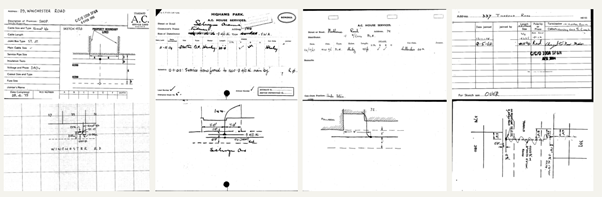
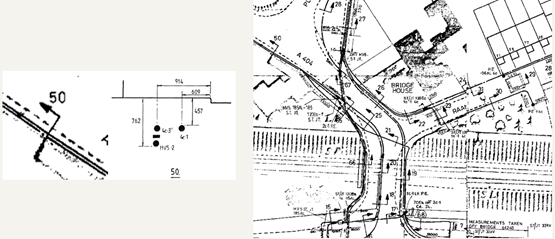
Much of that information was detailed and reliable, but it existed in a format designed for people to read, not for modern systems to analyse. Around 85% of UKPN’s legacy network data was held in raster format. This meant the records could be viewed as scanned images, but the assets, connections and attributes within them could not be easily searched, modelled or integrated into digital network systems.
When critical network data cannot be used at scale
UKPN’s challenge was not a lack of information. The information existed, but much of it was locked inside static records. For engineers, planners and asset teams, this created practical limits: network information often had to be interpreted manually, connectivity was harder to trace and asset data was not always available in a structured form.
This challenge became more important as the electricity network changed. Electrification, electric vehicles, heat pumps and distributed energy resources all required a more detailed understanding of network capacity and connectivity. Regulatory commitments also placed greater emphasis on data quality, accessibility and reliable asset information.
UKPN had already made attempts to address this. Those efforts had not delivered the required outcome. What was needed was an approach that could handle the scale of the records, the variation in how they had been captured and the need for reliable, structured data across different parts of the network.

Turning legacy records into usable network data
To address this challenge, UKPN launched Project Datum, a five-year initiative focused on the comprehensive digitisation of legacy network records across Eastern Power Networks and London Power Networks. Avineon Tensing supported UKPN as a trusted partner and advisor throughout this work.
The objective was clear: to turn scanned, static and difficult-to-use records into structured network data that could support modern asset management, improve operational safety and enable future-focused network planning. At the centre of this work was the conversion of raster data into vector data. In practical terms, this meant turning scanned drawings, maps and records into digital network objects with defined locations, attributes and relationships.
Delivering this across two network regions required both specialist geospatial expertise and the capacity to process large volumes of records consistently. Avineon Tensing mobilised a global team of more than 300 geospatial specialists, combining local project leadership with large-scale geospatial delivery capacity. The Eastern Power Networks region has now been fully vectorised and accepted, covering 485 scheduled batches across 10 operational areas with a 99.7% first-time quality assurance pass rate.

From raster records to a connected network model
The programme converts legacy records into a connected, topologically accurate digital network model. This includes assets across the network hierarchy, from higher-voltage infrastructure through to low-voltage assets and service connections.
The work is not only about capturing geometry. It is about building usable network data. Assets need to be correctly attributed. Relationships need to be maintained. Connectivity needs to be represented accurately so that the data can support practical use across the business.
For UKPN, this creates a stronger foundation for asset management, operational planning, regulatory reporting and future network modelling. It also reduces reliance on manual interpretation of scanned records.
Turning service records into usable asset data
As part of the wider transformation, Avineon Tensing also supported UKPN with AI-driven extraction from historical Service Record Cards. These records contain valuable information about electrical service installations, but are difficult to process because they combine typed and handwritten content, different templates, faded text and engineering sketches.
Using FME as the orchestration layer, Avineon Tensing developed a workflow that combined AI-driven interpretation, validation rules and human review. More than four million historical service record cards were digitised in this way, creating structured, queryable data from records that were previously difficult to use at scale.
This gives UKPN more accessible information for asset management, investment decisions and long-term planning.
A reliable, connected foundation for the future
By transforming legacy records into structured network data, UKPN has strengthened the digital foundation it needs for today’s operations and future network planning. Information that previously had to be interpreted manually can now be searched, queried and used more consistently across asset management, regulatory reporting and demand modelling.
UKPN now has access to:
- Network information in a structured, queryable format
- A connected view of the network, linking assets, relationships and location
- Consistent data to support planning and asset management
- Reliable information to support regulatory reporting
- A solid digital foundation for modelling future demand and supporting the energy transition
Take a deeper look
This overview brings together the broader story of Avineon Tensing’s work with UKPN. Two related case studies explore specific parts of the programme in more detail.
Vectorisation at scale: Eastern Power Networks
How Avineon Tensing supported the full vectorisation and acceptance of the EPN region, converting legacy raster records into a connected digital network model across 485 batches and 10 operational areas. Read the case study.

AI-driven extraction: Service Record Cards
How AI and FME were used to extract structured information from complex historical service records, showing how automation can support high-volume data challenges within a wider digitisation programme. Read the case study.

Does this sound familiar?
Many utilities and infrastructure organisations face a similar challenge. Valuable information exists in scanned documents, drawings or legacy systems, but cannot be used effectively.
This case study shows how legacy records can become a reliable digital foundation with the right combination of geospatial expertise, delivery capacity, quality control and carefully applied automation.
We help organisations take a structured approach to this challenge, working with existing data and proven technologies. Speak to one of our geospatial specialists to explore what is possible in your environment.


