

Strukton is building the digital foundation for tomorrow's railways
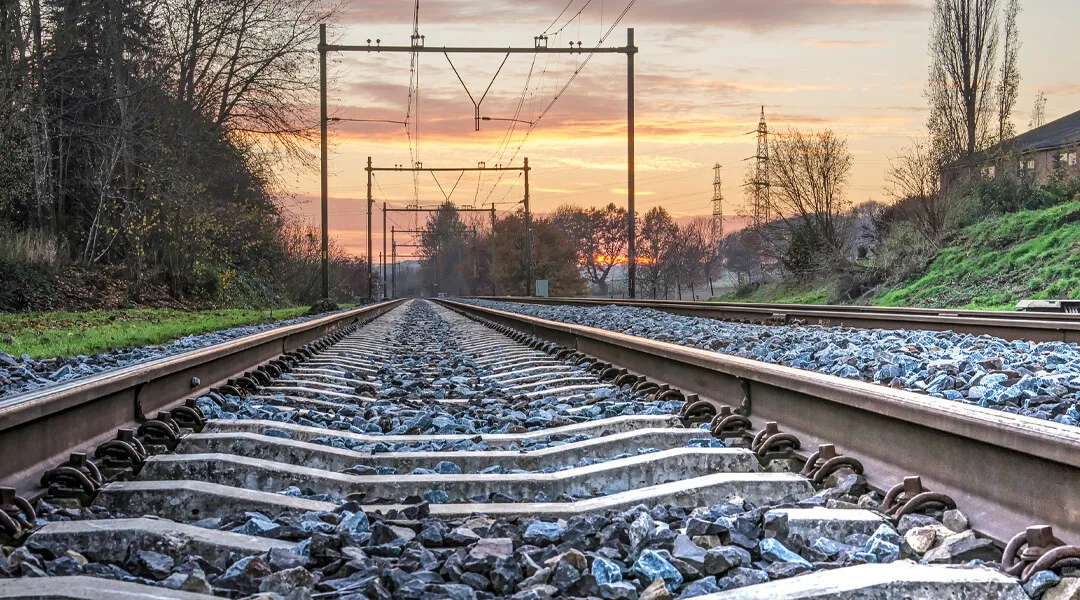
Railways are, in many ways, the future. As a sustainable mode of transport, and as a vital hub in the infrastructure of tomorrow. This calls for rails that are safe, available and well-maintained. At Strukton, one of the Netherlands’ leading rail infrastructure companies, this is increasingly done in a data-driven way. Where engineers once had to go out on site during track possessions to assess situations in person, Strukton now maps its railways digitally.
For Strukton, spatial information is essential: maps, analyses, workflows and digital forms ensure that trackwork can be properly prepared, carried out efficiently and reliably recorded. That's why Strukton works with Avineon Tensing on a robust, scalable and future-proof GIS and FME environment. A digital foundation that matches Strukton's ambitions: working in a data-driven way, achieving optimal efficiency, and keeping skilled professionals sustainably deployable.
Did you know…
- Strukton can now process critical workflows up to 10 times faster, meaning survey data is converted into decision-ready information sooner and projects can start earlier.
- Design teams get immediate insight into the feasibility of designs, so important decisions can be made faster and are better substantiated.
- Updates and releases are now rolled out in a controlled, predictable way, preventing disruption during engineering hours.
- Systems remain available even under peak load, so projects can continue without unnecessary delay.
- Strukton can continuously rely on Avineon Tensing's specialists for management, optimisation and further development of the environment.
The challenge
Within Strukton, the use of GIS and FME had grown rapidly. Survey data, scripts, maps and analyses had become increasingly important for preparing and carrying out projects in recent years. As a result, it also became clear that the existing environment was reaching its limits. “The environment was being used more and more intensively. That's when errors started to appear,” says Rinze van Doodewaard, Team Lead Cloud Security & Infra at Strukton.
That wasn't surprising. The set-up had grown organically over time, with multiple environments existing side by side. Some components were outdated and updates weren't always easy to control. There was also no clear test-and-acceptance pipeline. And since there was no fixed standard for workloads and scripts, heavy applications could put a lot of strain on the servers.
The solution
Strukton and Avineon Tensing collaborated on five components:
1. A target architecture as the starting point
The first step was translating Strukton's ambitions and pain points into a clear technical foundation. “Avineon Tensing mapped out our requirements and then built the target architecture. They set out the technical back end and consulted our teams on what was needed to achieve a robust infrastructure,” says Rinze.
2. Controlled development and roll-out
A clear development pathway was set up for new GIS products. “With the new infrastructure, we can first publish to a test environment, then to an acceptance environment, and only then to production. That's of huge added value,” says Wouter Groen, Team Leader BIM Desk & Virtual Analysis at Strukton.
3. Smarter workloads and scripts
Existing workloads and scripts were also critically reviewed: what puts strain on the environment, what could be smarter, and where are the biggest gains to be made? One of the key improvements was “Track Possessions”, an FME workflow that Strukton uses to map its trackwork geographically. “That script put such a heavy load on the servers that they were down for as long as two hours,” Wouter explains. “Avineon Tensing brought that down to ten minutes a day. That's a genuinely huge reduction in load on our servers.”
4. Turning survey data into usable analysis
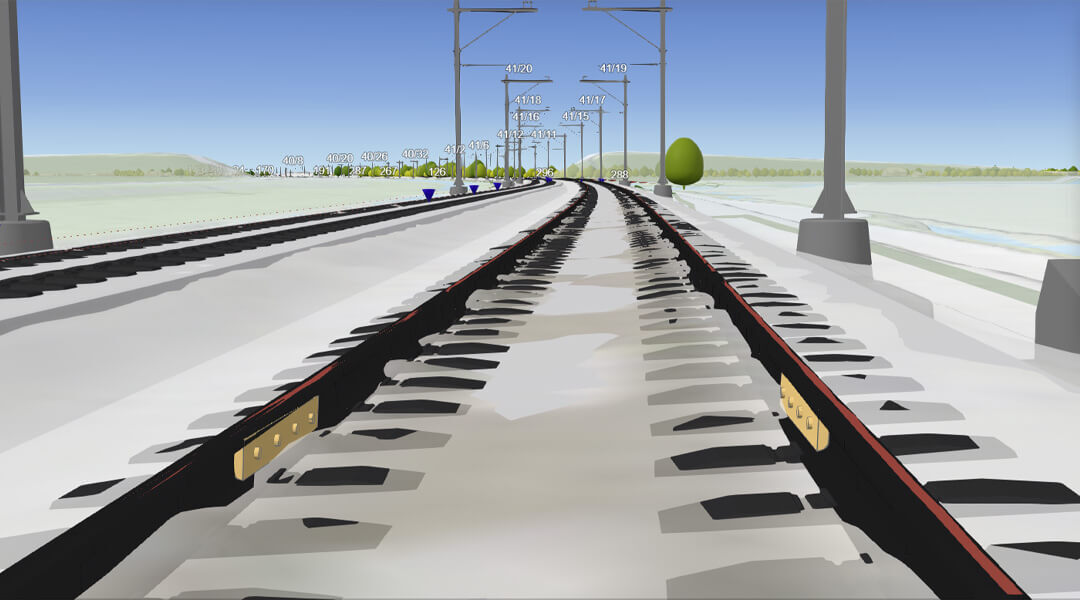
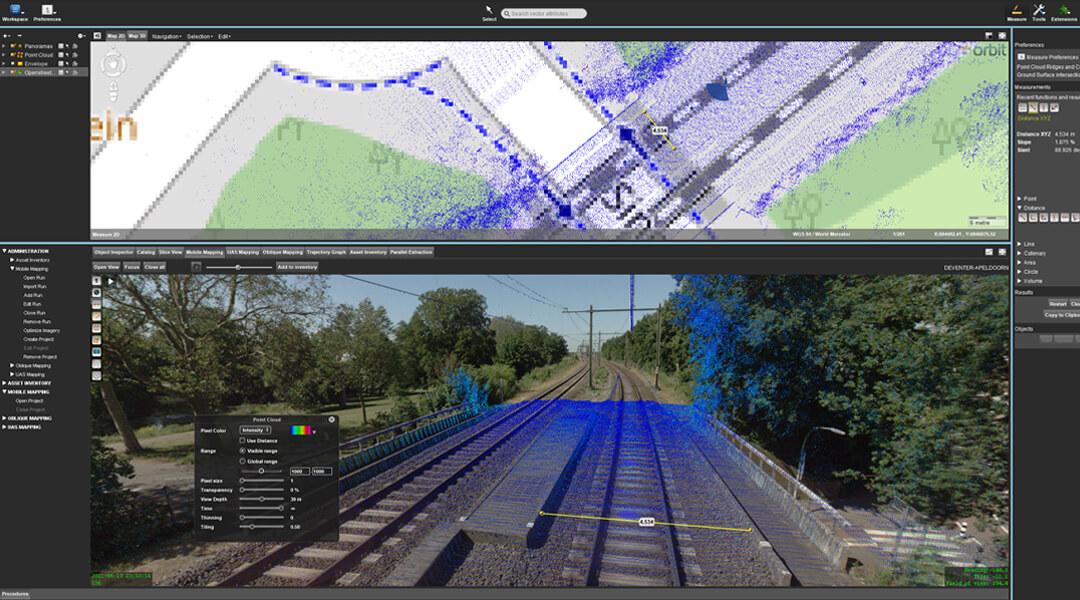
Strukton’s ‘Leonardo’ inspection train, developed specifically for detailed track surveys, can capture a precise picture of the rail environment. Avineon Tensing helped make sure that survey data is usable within the GIS system and further automated the analyses. As a result, Strukton can compare a design against the real-world situation much faster in order to assess its feasibility. Wouter: “If all the data is in good shape, you can have an analysis within a few hours. Then you’ll straight away whether you can build it. With this, we're demonstrably working smarter, and it gives us an edge over the competition.”

5. Managed services and specialist support
Strukton keeps control in-house but has expertise on hand via Managed Services whenever needed. “We're generalists,” says Rinze. “For that specialist GIS and FME knowledge, it's good to have a partner like Avineon Tensing at hand. They truly have genuine experts in house, and that gives us real peace of mind.”
Updates are also now rolled out in a more controlled way. Previously, updates could be pushed through without Strukton being aware of them. As a result, digital checklists would sometimes suddenly stop working during overnight maintenance work. “With the new infrastructure, we're in control of updates ourselves. If an error or mistake does creep in, we can now catch it early. This also means people have better trust in the product,” says Wouter.
More than a supplier
For Strukton, the value of the partnership isn't only in the technology. “I genuinely see Avineon Tensing as a strategic partner,” Rinze explains. “They think alongside us, know our environment, and also help with questions that aren't strictly covered by a contract or assignment. We look for solutions together.” Wouter agrees: “The people at Avineon Tensing are approachable and collaborative. The first instinct is always: help solve the problem at hand. We'll sort the rest out later.”
I genuinely see Avineon Tensing as a strategic partner.
The result
In practice, the partnership delivers Strukton, among other things:
- A solid architecture: Strukton now has a future-proof foundation on which new applications and innovations can be added quickly, at scale, and in a controlled way.
- More control: because Strukton has greater control over development and updates, new GIS products can be tested and validated first, catching errors earlier.
- Faster processing: Track Possessions went from two hours of server load to ten minutes.
- Smarter analysis: by translating survey data from the Leonardo measurement train into spatial information, engineers can see within a few hours whether a design is feasible, preventing costs of rework and last-minute changes.
- More peace of mind in management: through Managed Services, Strukton gets proactive monitoring and specialist support, so issues are caught early and downtime and management costs come down.
- Room to grow: the environment can absorb new workloads and peak demand without additional risk to stability or performance.
For Strukton, this means digital tools and resources are becoming more and more reliable for the people who work with them. From colleagues out on site during maintenance hours, to teams preparing projects, running analyses or developing new applications.
Rinze sees this project as a model for how Strukton wants to approach technology from now on: “This is the first project we've carried out entirely under this type of architecture. For me, this marks the beginning of doing it this way every time.”
This way, Strukton is building more than just railways: it's building the digital capability to keep infrastructure safe, accessible and future-proof for everyone, now and in the future.
Looking for a strategic GIS partner?
Stuck on a GIS challenge? We'd be glad to go over it with you. Book a no-obligation consultation.


